Best Hikes in Albania
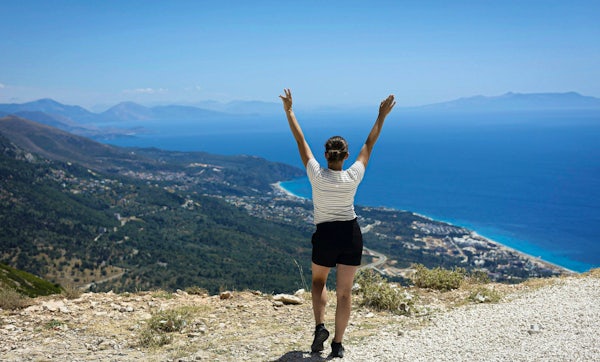
Albania is quickly becoming one of Europe’s most exciting hiking destinations. Beyond the postcard beaches, the country is full of raw mountains, deep valleys and remote villages, offering some of the most rewarding (and least crowded) hikes in the Balkans.
Whether you’re chasing peaks that make you feel like you’re on top of the world or lush valley trails to get lost in, the Albanian mountains have it all.
Mountains In Albania
Albanian Alps
Also known as the Accursed Mountains, the Albanian Alps dominate the far north of the country and are Albania’s most dramatic and rugged range. Characterised by jagged limestone peaks, deep valleys, and alpine meadows, this region is home to iconic villages like Theth and Valbona. It’s the heart of hiking and adventure travel in Albania, offering multi-day treks, remote guesthouses, and some of the wildest landscapes in the Balkans.

Korab Mountains
Stretching along Albania’s eastern border with North Macedonia, the Korab Mountains are defined by high elevations, broad ridgelines, and those views that make you feel like you are on top of the world. This range is home to Mount Korab, Albania’s highest peak at 2,764 metres high and is known for wide open pastures, glacial lakes, and quieter trekking routes. Compared to the Albanian Alps, the Korab Mountains feel more expansive and less crowded, appealing to hikers seeking solitude.

Skanderbeg Mountains
The Skanderbeg Mountains run through central Albania, forming a natural divide between the coast and inland Albania. These mountains look a little lower and more rounded than the northern ranges, but are just as beautiful with forested slopes and traditional villages. Easily accessible from Tirana, they are popular for day hikes, nature escapes, and rural tourism.

Ceraunian Mountains
Rising sharply from the Ionian Sea, the Ceraunian Mountains create one of Albania’s most striking landscapes, where rugged peaks meet turquoise waters. This range defines the Albanian Riviera, offering dramatic coastal roads, panoramic viewpoints, and mountain villages perched above the sea. It’s a unique blend of beach and mountain scenery, ideal for travellers who want both hiking and coastal relaxation. There’s no better reward after a long hike than a swim in the sea, right?

Nemërçkë Mountains
Located in southern Albania along the Greek border, the Nemërçkë Mountains are known for their long ridgelines, steep slopes and postcard views. The range is especially popular with experienced hikers and winter mountaineers, as snow often lingers at higher elevations, making it a great technical challenge. Although less developed for tourism, Nemërçkë offers a raw, untouched feel for those adventurous enough to take it on.

Albania Mountain Hikes
Valbona to Theth Hike
Often considered the most iconic hike in Albania, the Valbona to Theth trail is a classic alpine crossing in the heart of the Albanian Alps.
This is a point-to-point, full-day trek stretching 17kms that takes you from Valbona Valley to Theth, crossing a high mountain pass at around 1,800 metres. Most hikers take 6-8 hours to complete the trail, depending on fitness and stops along the way. The terrain varies from forest paths and rocky switchbacks to open alpine meadows with sweeping views of limestone peaks.
This hike is moderate to challenging, with a steady uphill climb for the first half and a long descent into Theth. It’s suitable for hikers with a reasonable fitness level and some hiking experience, but it’s not technical and doesn’t require climbing skills.
Where to Stay
Most travellers stay in Valbona Valley the night before and Theth after the hike. Both offer welcoming, family-run guesthouses that include hearty home-cooked meals - ideal after a long day on the trail. Luggage transfers between villages can often be arranged locally, so you only have to hike with a daypack.
When to Go
The best time to hike the Valbona to Theth trail is late June to September, when the pass is snow-free. Early-season conditions can vary, so checking locally before setting out is important.

Theth National Park Trails
There are multiple day hikes available within Theth National Park itself, offering dramatic mountain views without committing to a long alpine crossing.
These are mostly out-and-back or loop-style day hikes, with most walks taking between 2 and 5 hours, depending on the route. Popular trails lead to waterfalls, viewpoints and canyons, with a mix of dirt paths, forest trails and rocky sections. Elevation gain is moderate, making this a flexible option for different fitness levels.
The hikes here are easy to moderate, suitable for most travellers with basic fitness. While some paths are rocky and uneven, they are non-technical and well-trodden during hiking season.
Where to Stay
Most hikers base themselves in Theth, which has a wide range of family-run guesthouses. Stays typically include dinner and breakfast, making it easy to plan day hikes without needing to move accommodation.
When to Go
The best time to hike in Theth National Park is June to September, when trails are clear of snow. July and August are the busiest months, while shoulder months such as June and September offer quieter conditions and cooler temperatures.

Valbona Valley Walks
Valbona Valley is ideal for travellers who want mountain scenery without tackling a challenging trek. The wide valley floor and surrounding peaks make it one of the most scenic areas in northern Albania.
There are plenty of hikes to choose from, ranging from 2km to 8km, so you can expect to spend 1-4 hours on the trails. The terrain is mostly flat to gently rolling, following gravel paths, meadow trails and riverside tracks.
Difficulty here is easy, making it suitable for beginners, casual hikers, or anyone wanting a relaxed pace while still enjoying alpine views.
Where to Stay
Accommodation is spread throughout Valbona Valley, with traditional guesthouses offering meals and mountain views. Many trails start directly from guesthouses, so transport isn’t usually needed.
When to Go
The best hiking months are June to September, when the valley is green and accessible. Earlier in the season, higher trails may still have snow, but valley walks are often possible.

Llogara Pass Hikes
Llogara Pass is located in southern Albania, along the coastal mountain range that separates the Albanian Riviera from the inland regions. It offers some of the most unique hikes in Albania, with a breathtaking mix of mountain and coastal views.
These hikes are typically half-day treks, lasting 3-5 hours, with steady climbs through forested paths that open onto panoramic viewpoints. Typical trails around Llogara Pass take 3-5 hours, covering steady uphill sections through pine forest before opening onto panoramic viewpoints. Shorter hikes to lookouts may be closer to 5-6 km, while longer routes that continue along ridgelines or link multiple viewpoints can reach 8-10 km.
The hikes are moderate, with some elevation gain, but are manageable for hikers with reasonable fitness. The views over the coastline make the effort well worth it.
Where to Stay
Travellers usually stay near Llogara Pass or along the nearby Albanian Riviera in towns like Dhërmi or Himarë. It’s also the perfect base to check out some of the best beaches in Albania on those recovery days.
When to Go
The best time to hike Llogara Pass is May to October. Summer brings warmer temperatures, while spring and early autumn offer cooler air and clearer views.

Gjipe Beach Canyon Hike
The hike to Gjipe Beach is one of Albania’s most scenic coastal walks, combining canyon landscapes with a secluded beach finish.
This is a short out-and-back hike, and you should plan to take 1-2 hours to trek 2- 3 km each way, depending on pace and starting point. The trail follows a rocky path through Gjipe Canyon, opening out onto the beach at the end with views of the spectacular coastline.
Difficulty is easy to moderate, with some uneven ground but no steep climbs. It’s suitable for most travellers and doesn’t require hiking experience.
This is just one of the hikes we do on our Corfu & Albania Explorer, made easy with a local guide and all transport taken care of.
Where to Stay
Most people stay in nearby towns like Dhërmi or Himarë, visiting Gjipe as a day trip. Both offer a wide range of accommodation and dining options.
When to Go
The best time to hike to Gjipe Beach is late spring to early autumn, allowing for cooler hiking temperatures and fewer crowds.

Blue Eye (Syri i Kaltër)
The Blue Eye, known locally as Syri i Kaltër, is one of Albania’s most famous natural landmarks and is one of the top things to do in Albania.
This visit can be done either as a short 1km walk from the main access point or as a longer hike from nearby towns, depending on how active you want the experience to be. The walking route from the parking area takes around 20-30 minutes, while the hike in from town is typically 1-2 hours each way, following 4-6km of flat trails through forest and countryside.
Difficulty is easy, making it suitable for most fitness levels. The paths are well-used and non-technical, though sturdy shoes are recommended if hiking in rather than using transport.
Where to Stay
Most travellers visit the Blue Eye as a day trip from nearby towns such as Sarandë or Gjirokastër, both of which offer a wide range of accommodation options. Staying in either town allows you to combine the Blue Eye with other nearby sights or visit some of the best beaches in Albania.
When to Go
The Blue Eye can be visited year-round, but spring and early summer are ideal when water levels are high, and the colours are most vibrant. Visiting earlier in the day helps avoid crowds, especially during peak summer months.

Things to Know Before Hitting the Mountains
Best time to visit the Albanian mountains
Spring and Autumn are the best times for visiting Albania’s mountains. The peak Summer months of June and July offer longer daylight hours - but be prepared for some serious heat. If you want fewer crowds and cooler temperatures, the shoulder months are great. Winter transforms the mountains into a snowy playground, which sounds fun - but be prepared for limited tourist services and a lot more ‘winging it’.
Getting there & getting around the Albanian mountains
Mountain regions are remote, and public transport can be slow or infrequent. Buses and furgons (shared minibuses) run from major cities, but schedules are flexible at best and we always recommend giving yourself plenty of time when booking onward flights. For maximum freedom, renting a car is the easiest option - plus the winding roads and goat traffic jams make for a great travel story!
Phone signal & internet in Albania
You can access the internet in Albania through purchasing a local SIM (cheap and reliable), or downloading an e-SIM before you travel (fast and easy). Phone coverage is surprisingly good in towns and villages, but once you’re on the trail, the signal is a lot more temperamental. Download offline maps before you go, and don’t rely solely on data for navigation. Most guesthouses will have wifi, but don’t expect to be streaming Netflix in 4k!
Albanian language basics
Albanian is the main language, and English is spoken in tourist hubs and towns, but becomes less reliable in mountain villages. Learning a few basics goes a long way, and the language is a lot less intimidating than it sounds - plus the locals are incredibly patient and welcoming. A smile and a friendly “faleminderit” (thank you) will help you on and off the trail.
Safety in the Albanian mountains
Albania’s mountains are wild rather than dangerous, but preparation still matters. Trails may not always be clearly marked, the weather can change fast, and shops are few and far between. It’s easy to remain safe as long as you are diligent and prepared. Start early, carry enough water, let someone know your plans, and don’t underestimate distances.
Albanian money & payments
The local currency is the Albanian lek, and believe us when we say cash is king in the mountains. Most guesthouses, restaurants, and transport will only accept cash. Always bring more cash than you think you’ll need - it can be a long trek to the next ATM.

Albania’s best hikes take you through some of the country’s most impressive and least crowded landscapes. Whether you’re walking through mountain valleys, crossing high passes, or looking out toward the sea, these are trails that you will remember forever.
If you’re interested in combining these trails with coastal escapes, historic cities or local experiences, be sure to check out our Ultimate Guide to Albania to see how it all fits together.